Practices8 min
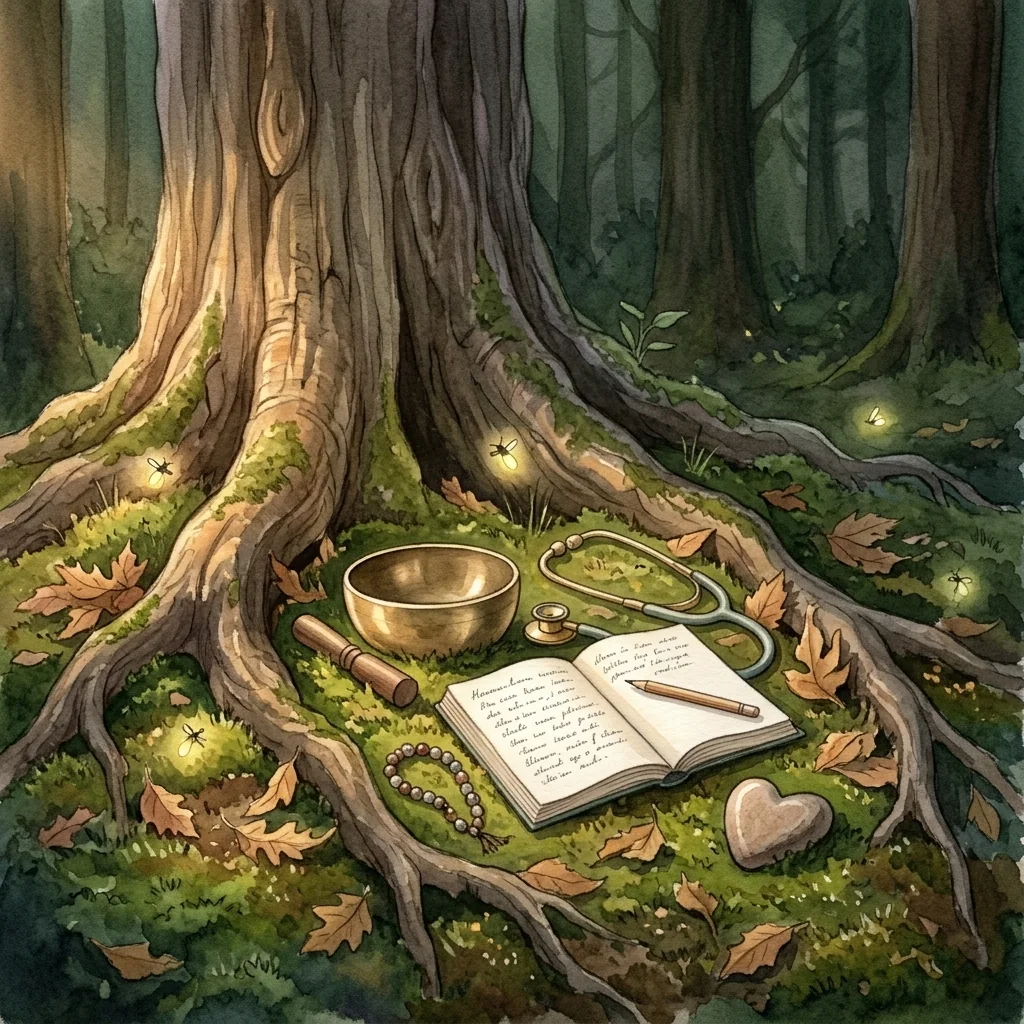
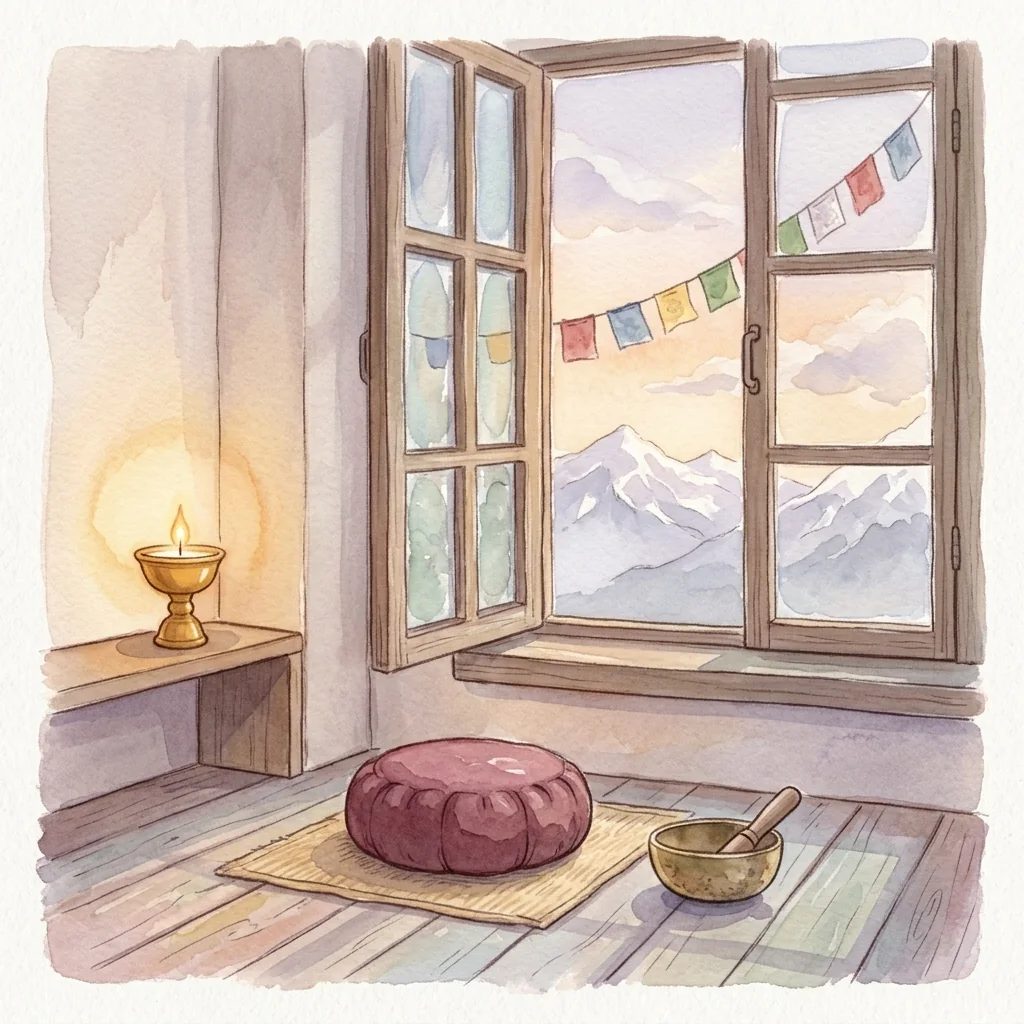
What monks' brains taught scientists about calm
Twenty years of brain scans on long-term meditators found something real. The useful part fits into five minutes a day.
7 November 2026
The blog
Short, practical, evidence-informed. The same care we put into the app, written down, with a few to lift you up and the odd note from Haki.
Nothing here is medical advice. There’s an RSS feed if you like those.
39
free notes, and counting

Twenty years of brain scans on long-term meditators found something real. The useful part fits into five minutes a day.
Meditation, mantra, Reiki, hypnosis, past-life regression. A Sydney healer's story, an honest look at the evidence behind each one, and how to keep an open mind without losing your footing.
Feeling shaken by war on the news is a normal human response, even far from the fighting. Why it happens, and small, evidence-based ways to feel steadier.
What to say when your child asks about war in the news, by age, plus how to limit what they see, ease bedtime fears and steady yourself first.
Waiting for messages, guilt about being safe, nights spent refreshing the news. What research says about this kind of worry, and small ways to carry it.
From Haki, for the mornings when getting up is most of the work.
If anxiety has made you feel like the only one who can't cope, the numbers say otherwise. So, quietly, do the people next to you in the queue.
A chat with the person who makes your coffee counts for more than you'd think. What the research on 'weak ties' found, and how to use it on a lonely week.
Fifteen minutes a week, looking for something bigger than you. A small study with a lovely finding, and a practice you can start on your next walk.
Not a hike, not every day. A study of nearly twenty thousand people found the link between nature and feeling well showed up at about two hours a week, however you split it.
On a heavy day, 'think positive' is useless and 'notice one good thing' is possible. What a 30-day diary study found about savouring, and twenty small things to start with.
Doing something kind for someone else is one of the better-tested ways to lift your own mood. A meta-analysis, a modest effect, and why modest is fine.
Getting better rarely goes in a straight line. Why a setback feels like starting over, and why it almost never is.
Everyone gets anxious. Not everyone has a disorder. Here's where the line actually is, why crossing it isn't weakness, and what changes once you know which side you're on.
The single most useful idea in anxiety psychology, and the one almost nobody is told: the things you do to feel safer are the things keeping you scared.
Short, because it's late and you're tired.
The chest tightens, the heart hammers, and the thought arrives: this is it. What's happening, how clinicians tell the two apart, and the one rule that overrides everything else.
Tight chest, fluttering heart, pins and needles, a stomach that won't settle. None of it is random. What each one is, why it happens, and what actually helps.
You can't argue a nervous system into calm. You can breathe it there, and the exhale does most of the work.
Why the worry shows up the moment the light goes off, and three tools from sleep science that nobody explains properly: cognitive shuffling, worry time, and trying to stay awake.
A headache becomes a search, the search becomes a diagnosis, the diagnosis becomes a week of dread. This is the loop behind health anxiety, and how to step out of it without pretending you're never allowed to worry.
You get everything done, you look fine, and you are quietly exhausted. What's happening underneath, why success doesn't fix it, and how to be safe without producing.
The feed is engineered to find the one thing your threat system can't ignore, and then the next. Here's what that does to an anxious mind, and the boundaries that survive contact with a bad news day.
No gear, no app, no membership. Walking reduced anxiety symptoms across thousands of people in randomised trials. Here's how much, why, and how to make it a habit that survives winter.
Searches for it more than doubled this year. Most of what's sold under the name is noise. Underneath is one real, well-studied lever, and you already have it.
Alternate-nostril breathing looks fussy and feels a little silly. How to do it without either, in about four minutes.
Exhausted, horizontal, and wide awake. Yoga nidra was built for exactly this, and the research is starting to explain why it works.
Flat is not the same as sad: it's the feeling of running hard in a direction you never chose. Svadhyaya and a page of honest questions can find the direction again.
Notes on building a companion instead of a coach: the streak we refused to ship, and what a small, round red panda taught us about tone.
Every breathing pattern on the internet has a number attached. Here's what the numbers are actually doing, and how to pick one without a spreadsheet.
A breath that sounds like a bee and leaves the head quiet. Ninety seconds, no equipment, slightly embarrassing, very effective.
The most-shared grounding technique on the internet, and why it works when your thoughts have left the building.
The middle-of-the-night wake-up is common, mostly harmless, and made much worse by the phone on the nightstand.
Blue light is only part of it. Light and scrolling together tell your body what time it is, and you can gently tell it otherwise.
Thinking about a problem feels like working on it. Rumination is the version that isn't, and it has a shape you can learn to spot.
The most famous hand gesture in yoga is also the simplest. Here's what it's for, what it isn't, and how to use it without the mysticism or the eye-rolling.
Gratitude journaling gets sold as a cure-all and dismissed as fridge-magnet wisdom. The original study was more modest, and more useful, than either.
The most common objection to being kinder to yourself is that you'll go soft. The research says roughly the opposite.
Journaling is everywhere and mostly vague. There's one specific version with decades of research behind it, and it takes four evenings.